
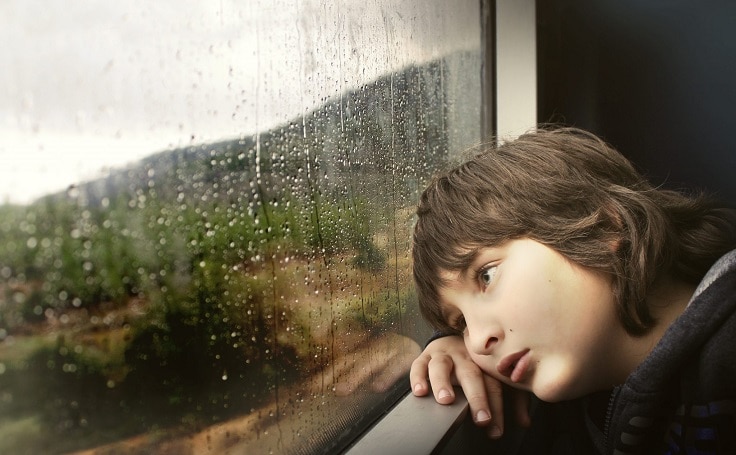
Unfortunately, sometimes some children do not want to play with others, causing the latter to feel bad. Fortunately, we adults, as parents and teachers, have in our hands the necessary tools to prevent one child from excluding another.
Next, we will see how we can prevent exclusionary behavior among children. To do this, we must act at the source, at the very moment when an anomalous situation is observed.
Why do some children exclude others?
In order to provide children with the necessary social skills to avoid situations of exclusion, we must know how the problem arises. Why does such a situation occur? The causes can be very varied:
- A child may be excluded in order to comply with the social rules of a game.
- It is also given so that some children have control of the game. As leaders, they make decisions as they see fit.
- They protect themselves from other children they consider intruders within their social group.
- Some children may understand that the entry of other boys into a game or group could jeopardize the situation, so they exclude new members to avoid distortions.
- There are also kids who feel threatened that they could be excluded, so they prefer to exclude first.
How we should respond with adults
Obviously, as older people, we must give a clear and forceful response to these situations of exclusion. But how can we do this so as not to generate major problems and discrepancies?
Non-punitive questions
An interesting formula to avoid exclusion is to ask non-punitive questions. That is, as adults, whether we are parents or teachers, we should question the child who tries to exclude another child without considering him or her as judged or the victim of a future punishment. This is done in order to receive more sincere and natural answers.
Once we are clear about the reason for the exclusion, we can look for appropriate solutions to the fact that a child does not want to play with another child for whatever reason.
Empathy generation
As adults, we must educate children to be empathetic. If they put themselves in the place of their peers, it will be easier for them to understand and accept them, whatever their personal circumstances.
Guidance and teaching
As adults, we will also work as guides and role models for children to learn social skills successfully. If they manage their emotions assertively, so much the better to avoid being excluded or excluding other children.
Active participation
In any case, as adults we will never look the other way. If we observe a similar situation, we must act with tact and empathy, but also with alacrity and diligence.
Children must be helped to understand that situations of exclusion for other children can be traumatic and generate future problems. And all this is done through truthful, committed and sincere dialogue.
Therefore, it is important for both teachers and parents to participate and be part of the solution. By speaking empathetically, understanding the feelings of the children, we can be of great help.
Use of resources
It is a good option to prevent children from excluding each other. Nowadays we have a lot of didactic and entertainment material. Stories, books, movies, games, plays, school activities... There are endless options for children to learn while having fun.
These possibilities are valid to know how to prevent one child from excluding another. Thanks to the professional and highly qualified team that we have at Logos Nursery School in Logos Nursery School, a nursery school in Las Rozaswe always take into consideration these and other proposals so that children are happy while they learn.
